Artificial Intelligence Toolkit
A Curated Resource for Judges
Judges are at the forefront of navigating the impact of artificial intelligence on the integrity of the justice system. Many will encounter a question of law or evidence that involves AI and some are either integrating generative AI tools into their workflows or assessing whether to do so. A basic understanding of this technology has become an essential judicial competency.
The Federal Judicial Center’s AI Toolkit provides an overview of AI, offers guardrails to help align its use with the core values of judicial independence and accountability, and explores AI-related evidentiary, legal, and judicial practice-related questions. The content in this resource builds upon the principles set forth in the Interim Guidance on Artificial Intelligence in the Judiciary released by the Administrative Office of the United States Courts in July 2025 and the ethics guidance issued by the United States Judicial Conference Committee on Codes of Conduct in February 2026.
Subscribe and Contribute: The AI Toolkit includes short text and 4-10-minute videos that address foundational principles as well as practical guides. Content will be added on an ongoing basis. To receive a monthly email describing new Toolkit posts, subscribe here. The Center invites Toolkit visitors to submit questions or comments in the FAQ sections or via this email.
-
AI Basics

Artificial intelligence (AI) is a transformative technology. Its influence can be seen in commerce, healthcare, education, public institutions, and, increasingly, the practice of law and the work of the courts. While judges do not need to become experts on the intricacies of how AI works, it helps to have a general understanding of this technology, and generative AI in particular.
-
Responsible Use

Many attorneys and self-represented litigants use GenAI tools to help with research and drafting, as well as organizing case materials and presenting evidence. Some judges use GenAI to facilitate their work. This section explores four judicial use paradigms: legal research; drafting and editing; summary; and other (mostly non-judicial) tasks. Underlying each of these paradigms is the core obligation to ensure...
-
Evidence

AI has introduced a broad range of complex evidentiary questions for judges. For example, how do judges assess the validity and reliability of acknowledged and unacknowledged GenAI evidence, disputes over deepfakes, and the impact of GenAI evidence on juries. This section offers an introduction to some of the frequently occurring evidentiary challenges and includes links to more in-depth analysis.
-
Law

Courts across the United States are encountering novel and complex AI-related legal questions on a wide range of issues. Examples include intellectual property disputes related to the training of LLMs and defamation cases that challenge content generated by chatbots. Courts are also grappling with how to address the use of GenAI by litigants, from incidents of AI hallucinations in briefs to the case...
New Videos
-
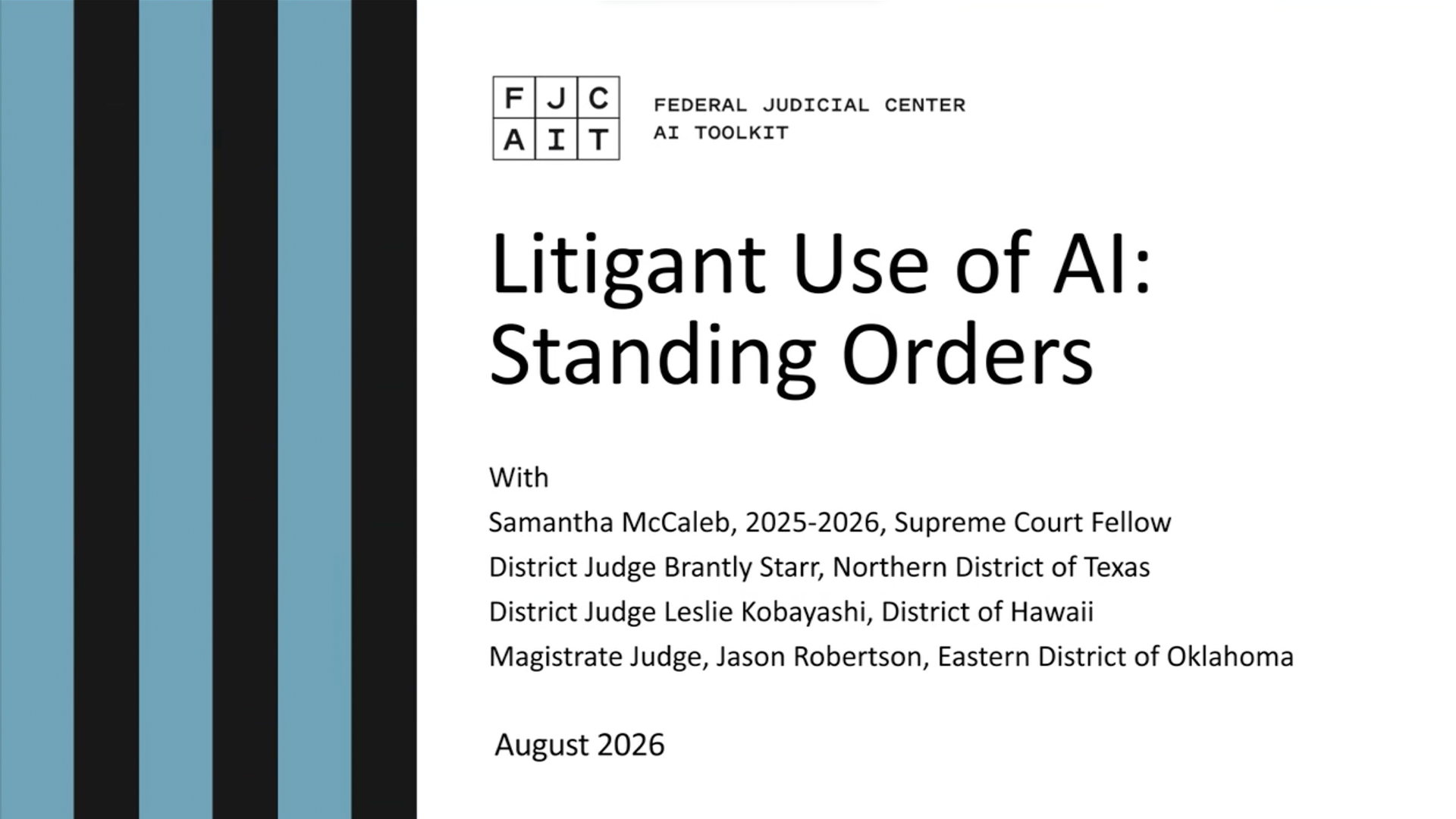
Litigant Use of AI: Standing Orders
Federal judges have crafted different types of orders addressing the use of AI by litigants. This video highlights the experience of three judges who developed standing orders to address challenges posed by the growing number of court filings that include
-
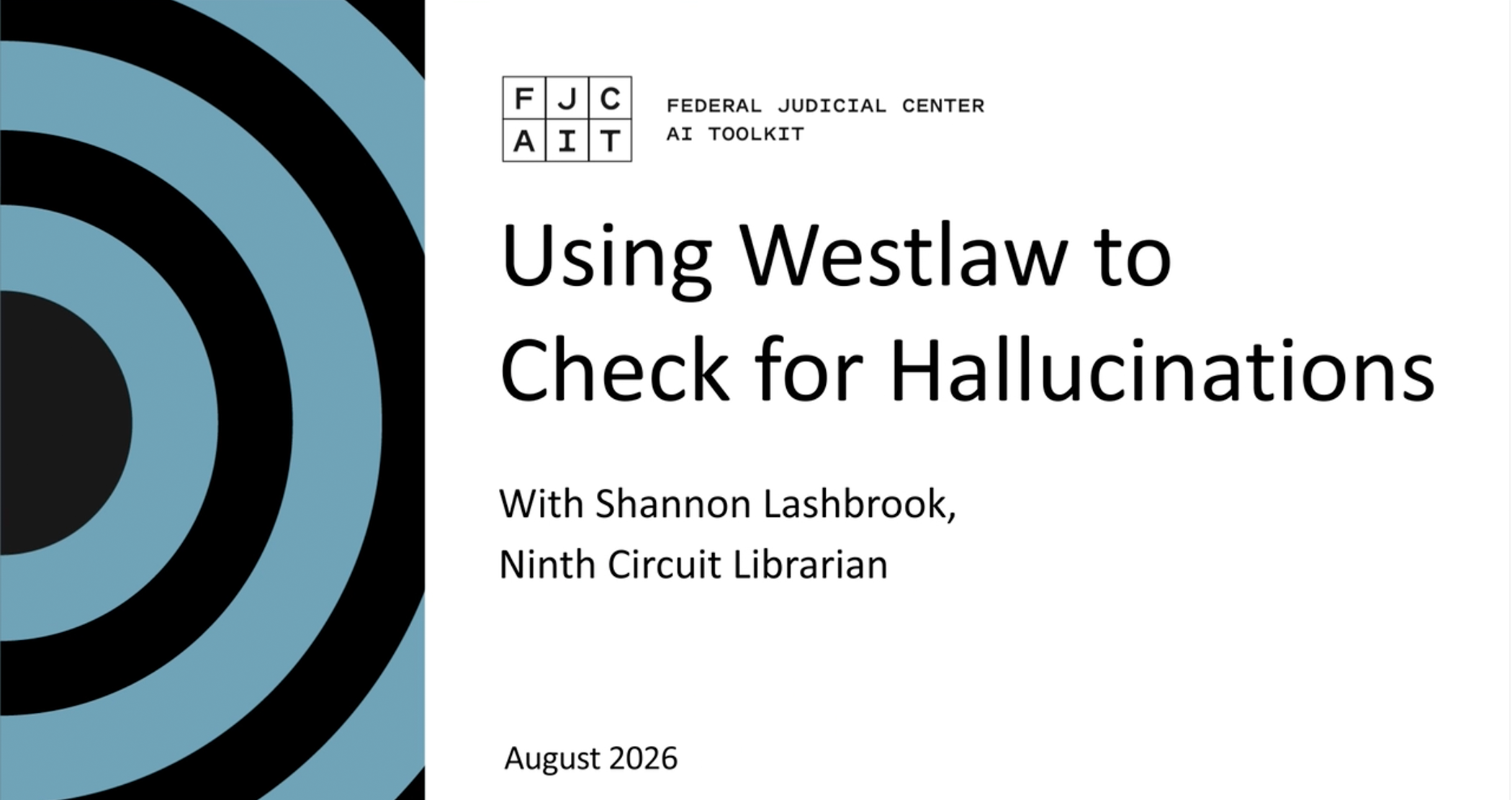
Using Westlaw to Check for Hallucinations
This video offers a quick tutorial on how to use Westlaw drafting assistant to check for hallucinated citations and quotations.
-
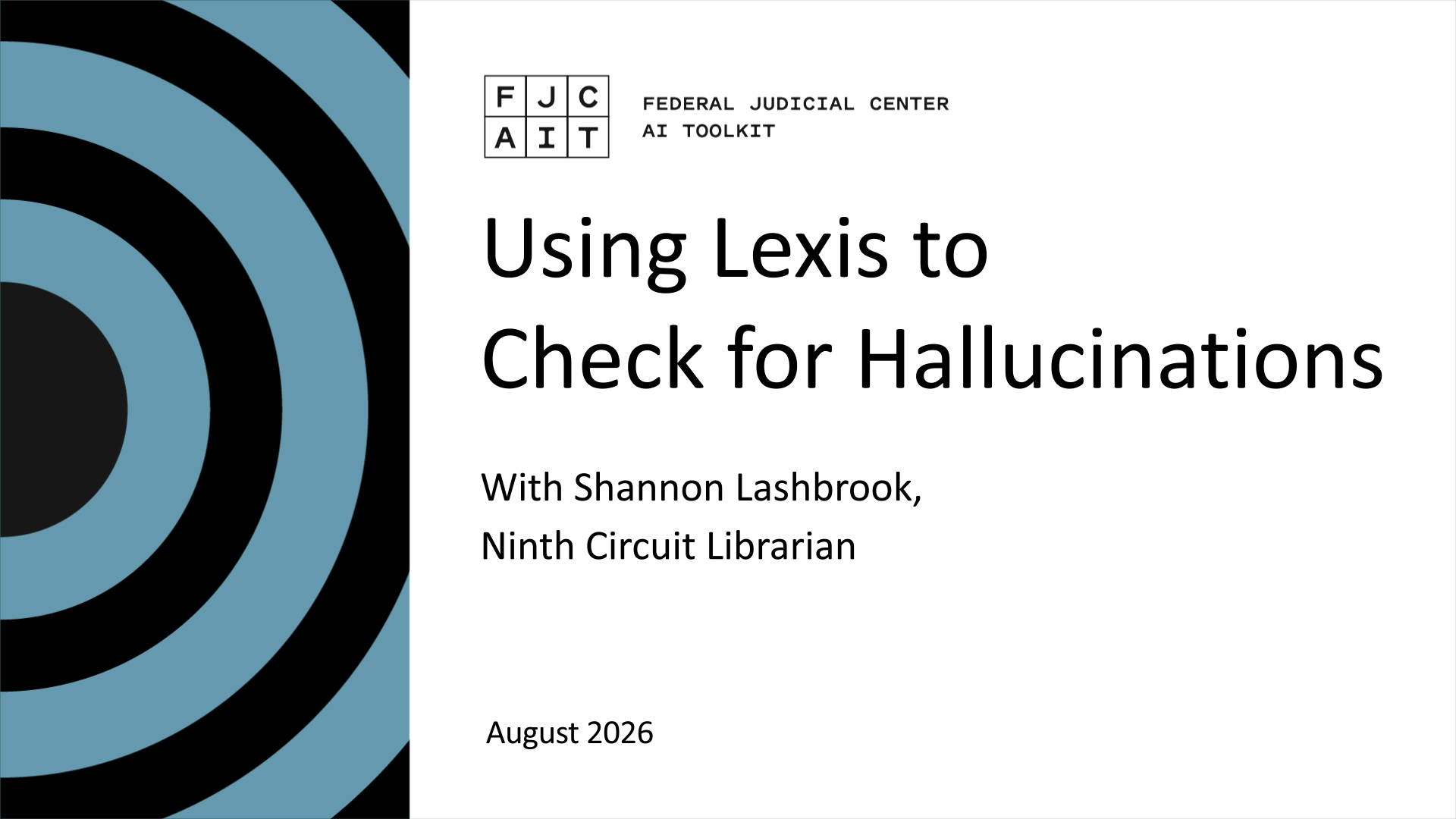
Using Lexis to Check for Hallucinations
This video offers a quick tutorial on how to use Lexis Document Analysis to check for hallucinated citations and quotations.